

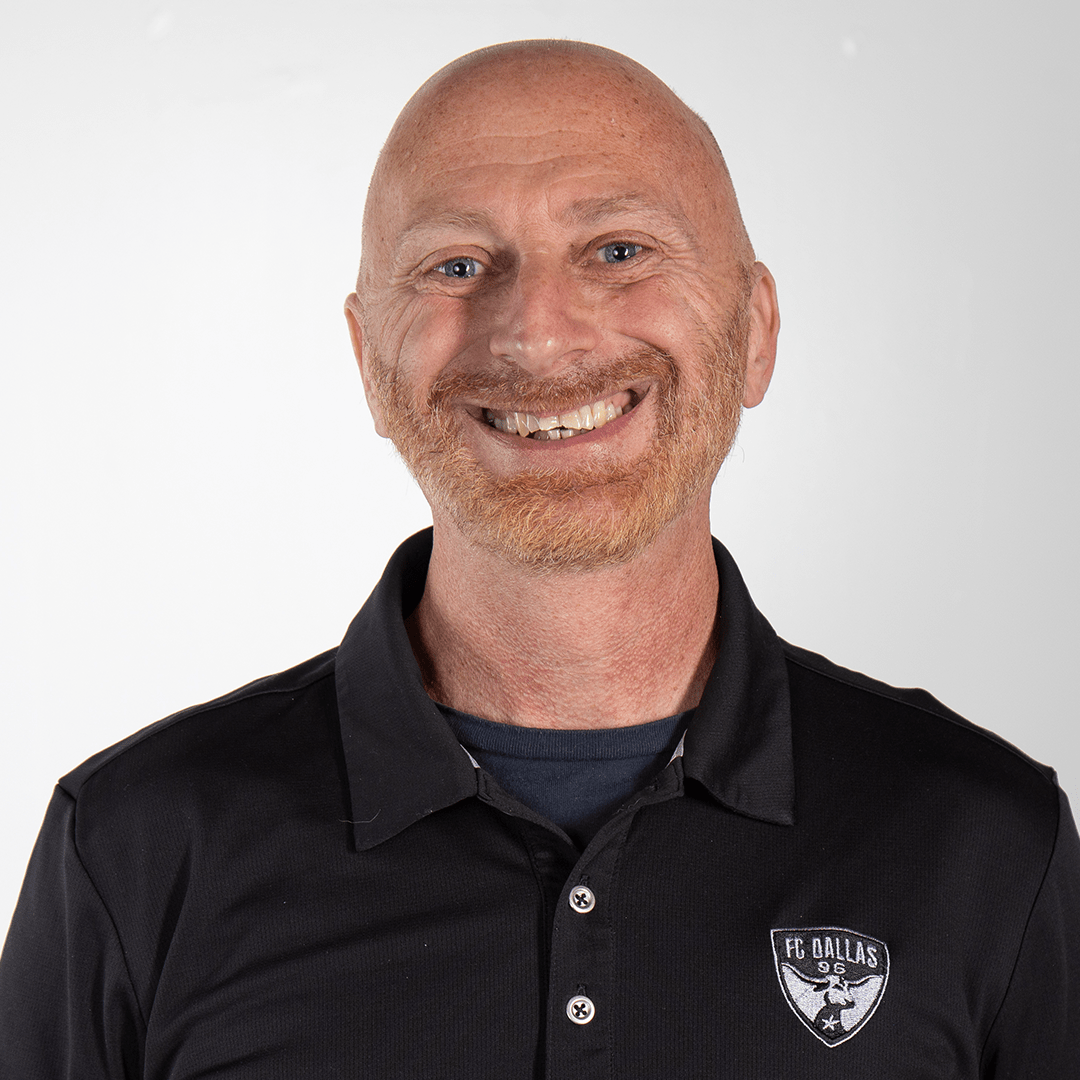
Steve Davis' weekly column, drilling down on five hot topics in American soccer
1. Don’t take expansion coaching jobs. Seriously … just don’t!
Which of these two statements is more accurate? That taking a managerial job at an MLS expansion franchise is “brave?” Or that taking a managerial job at an MLS expansion franchise is outright “foolish,” more akin to sticking your hand in a fan and then being surprised when it hurts?
Proof mounts that taking one of these position is more “career killer” than “career builder.” Adrian Heath is the latest victim, having just been dismissed at Orlando City. Once again we see that when an expansion team hires a manager, you just turn over the hour glass – and know that the sand will run out pretty quick.
Expectation is the biggest culprit. Seven of the last eight expansion teams failed to make the playoffs in Year One. But never mind that! Everyone thinks they have this thing figured out. The chiefs look around, congratulate one another for putting together such an extraordinary plan – then fire the manager when things don’t go just so.
This is all important to note because three incoming franchises will soon seek their man, the manager who will boldly, proudly lead the charge into MLS. (Two clubs for sure will need a manager, Atlanta and at LAFC, and one might want a new coach, incoming NASL club Minnesota United.)

Someone will take these jobs, of course – and it will be a significant career risk.
Heath lasted a year and half. That’s a lifetime compared to the ridiculously short rope handed to Teitur Thordarson, the Icelandic manager who lasted almost all the way into June in the Whitecaps’ first MLS season. Jason Kreis was the victim of City Football Group’s half-baked planning, holding his position for just one season, never mind indisputable evidence that he knows how to win in MLS.
At other spots the manager did well enough initially, but ownership wasn’t convinced of the course or the chemistry. So it was that John Spencer in Portland. A promising first year wasn’t enough to overcome a slow-start in Year 2. Owner Merritt Paulson told me at the time that this was about the larger club direction; Caleb Porter’s subsequent body of work has validated the Timbers’ choice, but the point on first managers still stands.
In Montreal, Jesse Marsch left after one season, mutual frustration mounting at divergent opinions on club direction.
Toronto FC isn’t even worth talking about; that early, lost puppy dog of a regime chewed up five managers before anyone lasted past 36 matches.
A couple have lasted: Frank Yallop in San Jose and Sigi Schmid in Seattle. But five new franchises have launched since Seattle (2009), and five have parted ways with their first managers in relatively short order. So you get the point: expansion coaches now seem almost destined to fail.

2. Sitting deep to prolong playing days
Ian Bishop was 35 when he joined the Miami Fusion back in 2001. Clearly, this was a guy past his best days at West Ham and Manchester City.
And you know what? He was absolutely brilliant in his role on that talented and successful team. You know why? He was tasked with the right role – a position and set of responsibilities that he could handle.
A lot has changed in MLS through the years, obviously. But a few things have remained remarkably consistent, and here’s one of them: men who might not stand out otherwise can become valuable assets if they are handed (and if they embrace) the correct role, especially the holding spot in central midfield.
Chris Armas didn’t have a rangy skill set, but he made himself into a U.S. international and was a critical cog at Chicago well into his 30s by protecting the back line like a nasty guard dog. A well-aged Daniel Hernandez was perfect on Dallas’ 2010 side, happy to be a holding presence behind a two-way shuttler (Dax McCarty) and a playmaker (David Ferreira). It was a beautiful balance that took that team the MLS Cup final.
David Beckham was becoming a defensive liability on the flank but proved wonderfully effective when he moved inside, tackling well enough and then spraying pinpoint balls from areas withdrawn.
And now gaze the way of D.C. United, where Marcelo Sarvas looked like aging, surplus depth as the latest campaign started at RFK. Now, however, Sarvas has big role in Ben Olsen’s plan around RFK. Usually a 4-4-2 man, Olsen has switched up his arrangement into a 4-1-4-1. Sarvas, a 34-year-old Brazilian, has a lot of ground to cover, but it’s mostly lateral shuffling. Unbothered by the responsibility of making late runs into the opposition penalty area or even getting further up the field in support of the attack, he’s looking quite comfortable in the holding role.
He can still be beaten for speed, but his won’t be as exposed in this role as in a more conventional two-way look. We’ll have to see whether D.C. United has the right pieces to put around Sarvas. For now, at least, they’ve taken a 34-year-old midfielder in winter and found a way to get the very best from him.

3. Bruce Arena has done it again!
There are a lot of reasons why Bruce Arena is the best manager ever to prowl an MLS sideline. That man’s got a PhD in MLS.
Sure, he’s got a lot of resources – always has, in fact – but don’t underestimate how savvy he is in identifying and developing supporting parts.
He’s unearthed gems (Sebastian Lletget), made savvy trades (Robbie Rogers) and provided opportunity for young talent (Gyasi Zardes). But in building a balanced roster within the salary-confined space of MLS, his specialty is perhaps in repurposing athletes deemed unneeded elsewhere and squeezing a little more usefulness from them.
The latest is Jeff Larentowicz. After five good years in New England, another three good ones in Colorado and three more in Chicago, as a starter all the way, Larentowicz seemed nearing the end at 32. He had moved from the midfield to central defense with the Fire.
But “Big Red” signed as a free agent with L.A., figuring on a bench role behind Steven Gerrard, Nigel de Jong and perhaps others, depending on the arrangement. Well look what’s happening now:
Gerrard has moved further ahead in the formation, with Larentowicz doing the protecting. In a swell road win last weekend at Seattle, it was Larentowicz and Baggio Husidic patrolling as dual holding mids. Assuming he can behave, de Jong will probably partner with Larentowicz going forward.
A lot of teams would have taken a pass on Larentowicz. Arena knew better. This isn’t his first rodeo, after all.

4. Not even Seattle is entitled to win every year
Sometimes it seems there are two completely different conversations that go on involving MLS clubs. Those that happen around most organizations, and those that happen around the Seattle Sounders.
There is some hard-to-define spirit of exceptionalism, it seems. Or perhaps its entitlement, which I sort of get: the club has established the gold standard of fan support, after all.
Here’s what I mean: Anyone else casting a sideways glance at some of the ongoing narrative out of Seattle? It’s one that suggests Seattle is a player away from restoring greatness, one or two missed chances away from planning championship parade routes. This for a club that sits last in the West, with fewer goals than anyone in the league. Yes, even fewer than Chicago.
From the outside, it just looks like the current roster is simply too old and too flawed in too many ways. And at a larger level, the entire philosophy needs adjustment. If they want to be elite and remain consistently elite, the Sounders have to combine the strategy of collecting high-priced, high-value DPs with a little more old-fashioned “figuring it out.”
This is MLS, after all. At some point, you can’t just swap out high-dollar pieces willy-nilly. Everyone gets a do-over here and there, but the restrictive salary-cap and player acquisition mechanisms are designed specifically so that clubs can’t “shopping spree” their way to the top each and every season. This isn’t Real Madrid.
Example: There’s talk of too many missed chances. So the conversation goes to needing something different at striker. Of course, they also need something better at playmaker, so the talk for most of 2016 was about using the available DP slot for one of those. Oh, some defensive shoring up wouldn’t be bad, either!
Now, back to striker. Yes, Seattle’s roster has drifted toward highly imperfect at the position. You know who else around MLS can say the same? About 10-12 clubs.
Clint Dempsey has lost a step; some opportunities aren’t getting finished that he would have buried in past years. (Jordan Morris is doing fine as a rookie striker, by the way, but he keeps getting stuck out wide – and that’s not a personnel issue. Not strictly speaking, at least.)
I see about 10 clubs that would take Dempsey in a second, ask him to play (slightly out of position, admittedly) as a striker and then sort out the rest. Meanwhile in Seattle, they keep talking about needed reinforcements. That’s fine – except that around CenturyLink, you get the feeling that everyone feels entitled to backups who are starters elsewhere.
So, welcome to MLS! Welcome to this place where the rest of the league lives – where you have to actually, you know, figure things out! It’s taking your best assets – in Seattle it’s Morris, Dempsey, Stefan Frei, Osvaldo Alonso and perhaps Chad Marshall, a fivesome most MLS clubs would happily take – and then adding appropriate pieces around them, assembling a useful blend of youth, veteran role players and those difference-maker DPs.
At some point, it’s about making do. And then at some point it might also be about rebuilding. Even Seattle Sounders FC, with gold standard fan support, isn’t entitled to winning records and playoff soccer every year. That’s just not the way Major League Soccer is typically going to work.

5. The Little Five
5a. This really is silly story week for American soccer journalism, apparently. This Forbes piece is straight out of the 1990s. And not even the late 1990s! The basic premise is that America won’t embrace soccer until it increases scoring. As if world soccer leaders, concerned about disappearing appeal of the sport, are sitting around wondering, “HOW are we make the game more appealing for Americans?” Seriously, all that’s missing are the old, ignorant 1980s calls to “widen the goals.” Then this one. Really, there’s too much wrong with it to even start. It’s so full of flawed premise, broad brushes, stereotyping and egg-headed, inaccurate analysis of the actual pro soccer scene here that it’s shocking it would appear in the New York Times. It’s a seriously poor piece of journalism.
5b. Nobody is going to make the case for C.J. Sapong as league MVP, not unless he goes on a serious second half scoring run. (Sapong currently has five goals, two assists in 15 starts.) But there aren’t many teams whose entire look changes as drastically when he’s in or out of the lineup. Sapong was back last week after missing about a month, and the difference in Philly’s offense (in a 3-0 win over DC United) was remarkable. Yes, Ilsinho was useful, skillful and productive. But Sapong’s passing and presence adds a lot.
5c. Hate to say “We told you so,” but … Yeah, this was about as predictableas regretting a swim through the comments section. It’s a story that says, more or less, NYCFC has no leads, no progress and no new hope in the search for a better place to play. As expected, we’re all stuck with Yankee Stadium for quite a while.
5d. Sam Croninis having a great year in Colorado, having found a great role for Pablo Mastroeni’s side. Rafael Bacais cruising at Cruz Azul in Mexico. Iranian international Steve Beitashouris having a solid season at Toronto FC. So is Justin Morrow, another part of that rock-solid defense at BMO Field. The common thread: they all played recently at San Jose, a club now limping along below the red line, winless now in seven matches. Players move in MLS, of course, and every club has a few personnel misses. Still, it’s fair to wonder what Dom Kinnear’s team might look like with a couple of these guys?
5e. Injuries are always a bummer. But this news on DaMarcus Beasley, who will require surgery, although we don’t know how much time he’ll miss, is a particular blow. The guy is 34, but remains near the top of his game, still a highly effective left back. More recently, he’s been critical to Houston’s move back toward good form, even named captain by interim manager Wade Barrett.
Steve Davis has covered Major League Soccer since is first kick in 1996. He writes on-line for FourFourTwo and co-hosts the weekly radio show/podcast ESPN Soccer Today on 103.3 FM in Dallas. Davis is also the radio play-by-play voice for FC Dallas on 100.7 FM.


